
Our Digital Consulting Services
Many companies feel overwhelmed by technological changes. Technology can be expensive, difficult to use, and even harder to adopt.
We make it easy.
We start with people and what they need. We then develop or implement the appropriate technology. The result: changes that work, teams that embrace them, and companies that grow. Our Digital Marketing Consulting part of the people for the technology to really work.
Strategy and Business Transformation
Roadmaps for digital transformation aligned with your business goals.
Learn more →Artificial Intelligence and Automation
AI solutions that increase efficiency and empower your team.
Learn more →Talent Management and Digital Culture
We accompany cultural change so that technology is adopted by people.
Learn more →Omnichannel and Retail
We connect physical and digital channels for a consistent and profitable customer experience.
Learn more →The Proportione Method: Co-creation and Change Management
Why do traditional digital strategies fail?
Most digital transformation projects do not achieve their goals: they focus only on technology and forget the people who must use it.
Our Focus: Technology + People
Our 20-60-20 method integrates people from the start: your team defines the context and objectives, AI supports the work, and your team validates quality and decisions.
Your team defines
Strategy and context
AI works
Repetitive tasks
Your team validates
Quality and decisions
Phases of a Real Transformation
1. Diagnosis and Strategic Alignment
We analyze the situation, align business objectives and design a realistic action plan.
Learn about our approach →2. Team Adoption and Training
We train and accompany teams to adopt new tools with confidence.
Meet the → Team3. Technology Implementation and Continuous Improvement
We implement the right technological solutions and establish continuous improvement processes.
See our services →Success Stories and Projects
We work within your ecosystem
We don't replace what works. We optimize what you have.
We transfer knowledge
We do not create dependency. We train your team to grow on its own.
Measurable results
Positioning, sales, efficiency. Numbers you can see.
Real budgets
We do more with less. No surprises.
Clients we work with
Fundación porqueViven
Pediatric palliative care · Madrid
Instituto Internacional de Teología a Distancia
Theological Education · Madrid
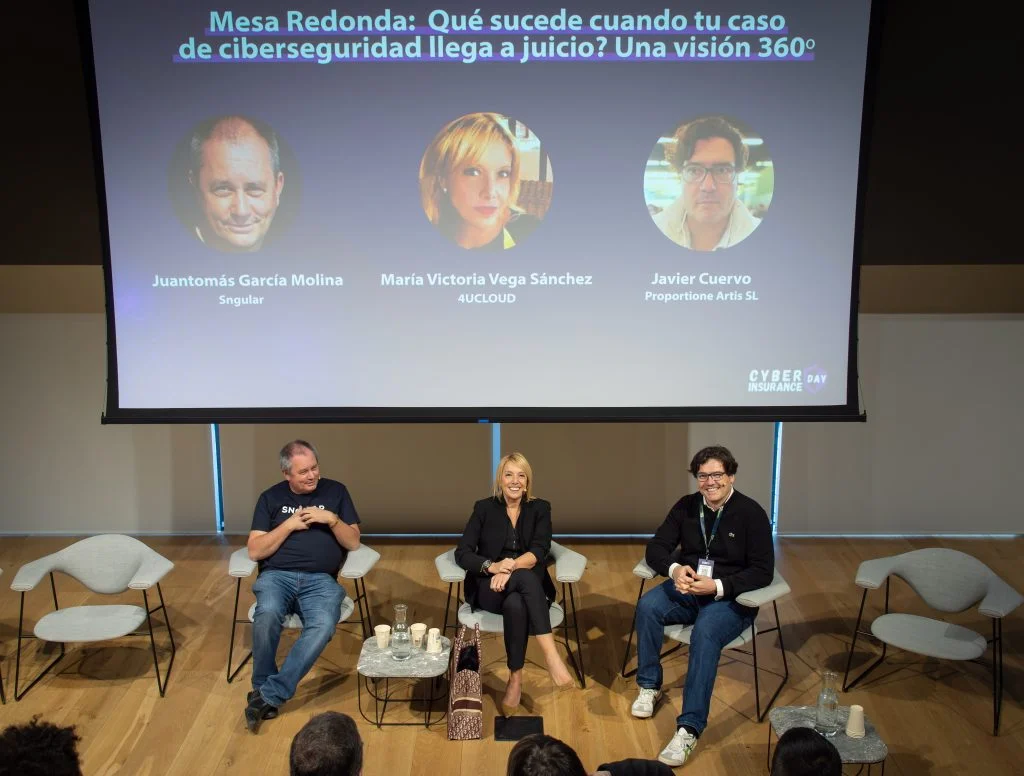
BrainSINS, where Javier Cuervo was an investor partner and responsible for business strategy, was recognized as a Gartner Cool Vendor in 2014 for its innovation in e-commerce personalization with artificial intelligence.
Gartner Cool Vendor 2014
International recognition
Growth is not achieved through campaigns
Sustainable growth resembles the spiral of the divine proportion: organic, chained, in golden ratio. The one Pacioli and Leonardo published in 1509 — and the one that gives this firm its name.
Read the Proportione method · Contact
Digital Consulting in Madrid · Strategy and innovation · Digital Marketing