Migrating on-premise servers to the cloud: what moves and what stays

Your company has servers on its own premises, and applications, files, and processes that no one wants to touch depend on them. Some are in versions that the manufacturer no longer supports.
Your company has servers on its own premises, and applications, files, and processes that no one wants to touch depend on them. Some are in versions that the manufacturer no longer supports. Before moving anything, you need to know what each server does. We start there, with a diagnosis of your data and processes.
To start, simply describe what servers you have and what they are used for. Do not send credentials or databases.

Request your Proportione Legacy diagnosis

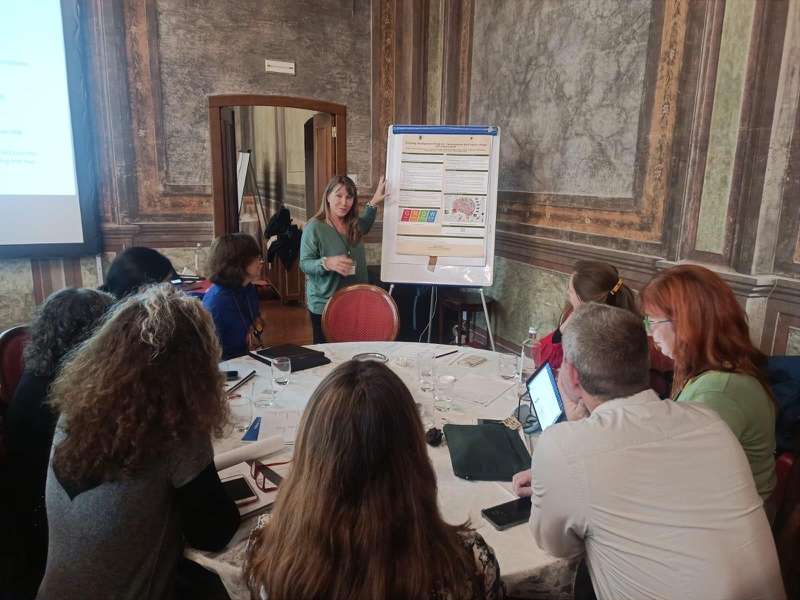
A Proportione professional presents a work plan to a group in a meeting room

In a nutshell

A server doesn't move blindly: first, it would invent what it does

That a server is old doesn't say what to do with it. What it says is what it supports today: what applications run, what data it stores, what other systems talk to it, and who knows it internally.

That's why we start with a diagnosis of your data and processes before choosing a destination. It delivers an inventory of processes and data, the options (build, buy, or connect), and a phased scope proposal.

What it means for you: you will know what you have on each server before deciding where it should live. Next step: request the diagnosis, which we explain below.

Windows Server 2012 without support

The dates are set by the manufacturer. According to Microsoft's lifecycle page, extended support for Windows Server 2012 and for Windows Server 2012 R2 ended on October 10, 2023. Those same pages include three years of Extended Security Updates (ESU); the last one closes in October 2026.

After that date, the version does not appear with further update periods on the manufacturer's page. Confirm the status of your installation with them before planning.

What to do with a server on that version is not decided by the date. It is decided by what it runs: if the application can be moved to a newer version, if it needs to be rebuilt (for example, an application in Visual Basic 6, FoxPro, or COBOL) or if it is enough to isolate it and connect it with the rest.

What it means for you: the manufacturer's date marks when to decide, not what to decide. Next step: request the diagnosis and arrive at the date with the inventory done.

From own server to the cloud: what moves and what doesn't

The cloud is already common in companies. In 2025, 52.7% of EU companies with ten or more employees purchased cloud computing services, according to Eurostat. Being common does not mean it is the destination for every server in your company.

The diagnosis classifies each workload into one of three situations:

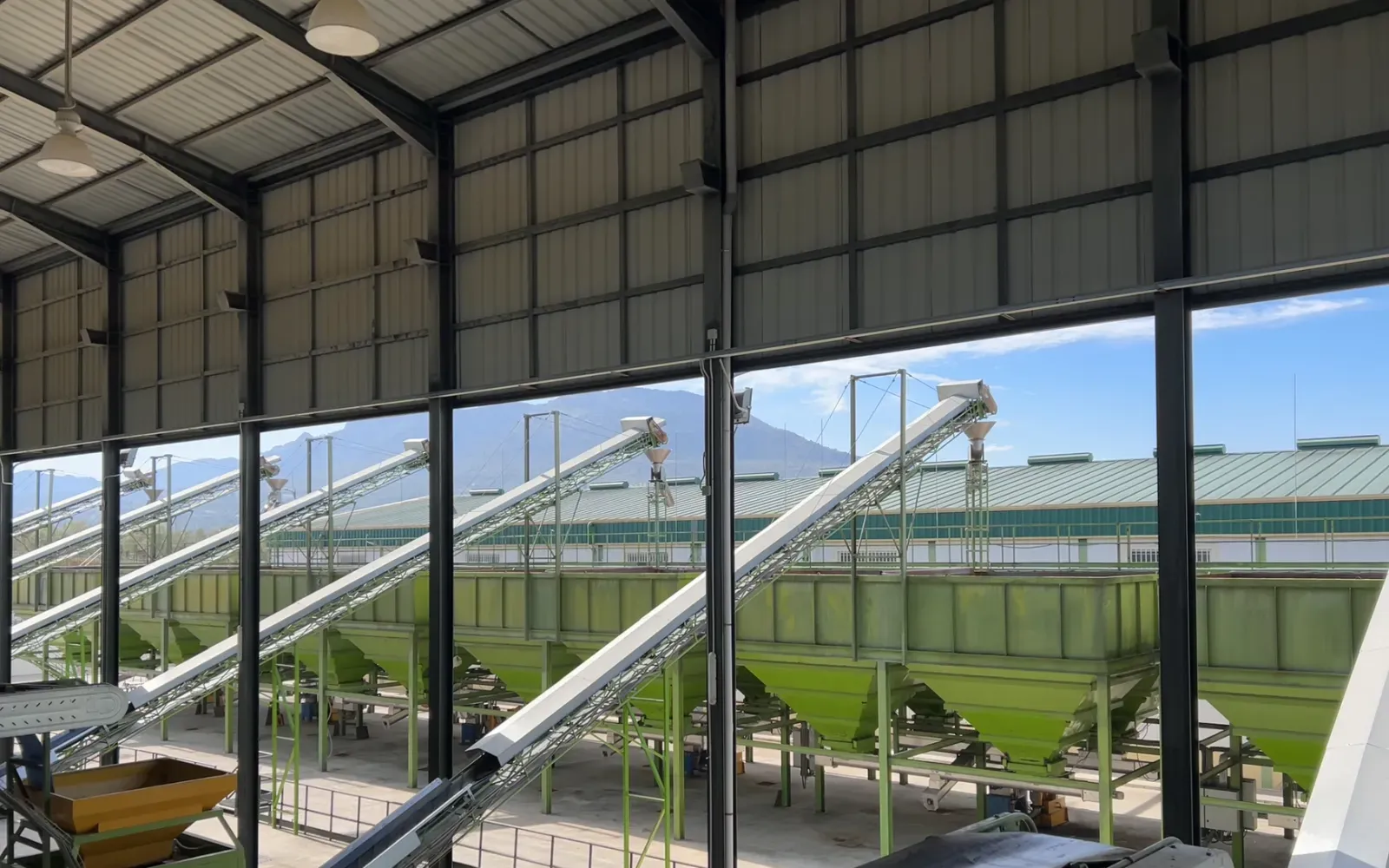
Industrial warehouse with conveyor belts and feeding hoppers, viewed from a walkway

What it means for you: the destination is chosen service by service, with data from your case, not by trend or by the provider you already have. Next step: request the diagnosis and tell us which servers concern you the most.

Request your Proportione Legacy diagnosis

When data cannot leave your facilities

There is data that, by its nature or by obligation, must not leave the company. In that case, the cloud is not the destination. Migration can be done without it.

AI can run on your own server and, if necessary, offline. This is the same option we described in legacy systems migration service.

What it means for you: your data does not have to leave your premises. Next step: tell us in the form that this is your requirement, and the diagnosis starts from there.

What you receive and how to proceed

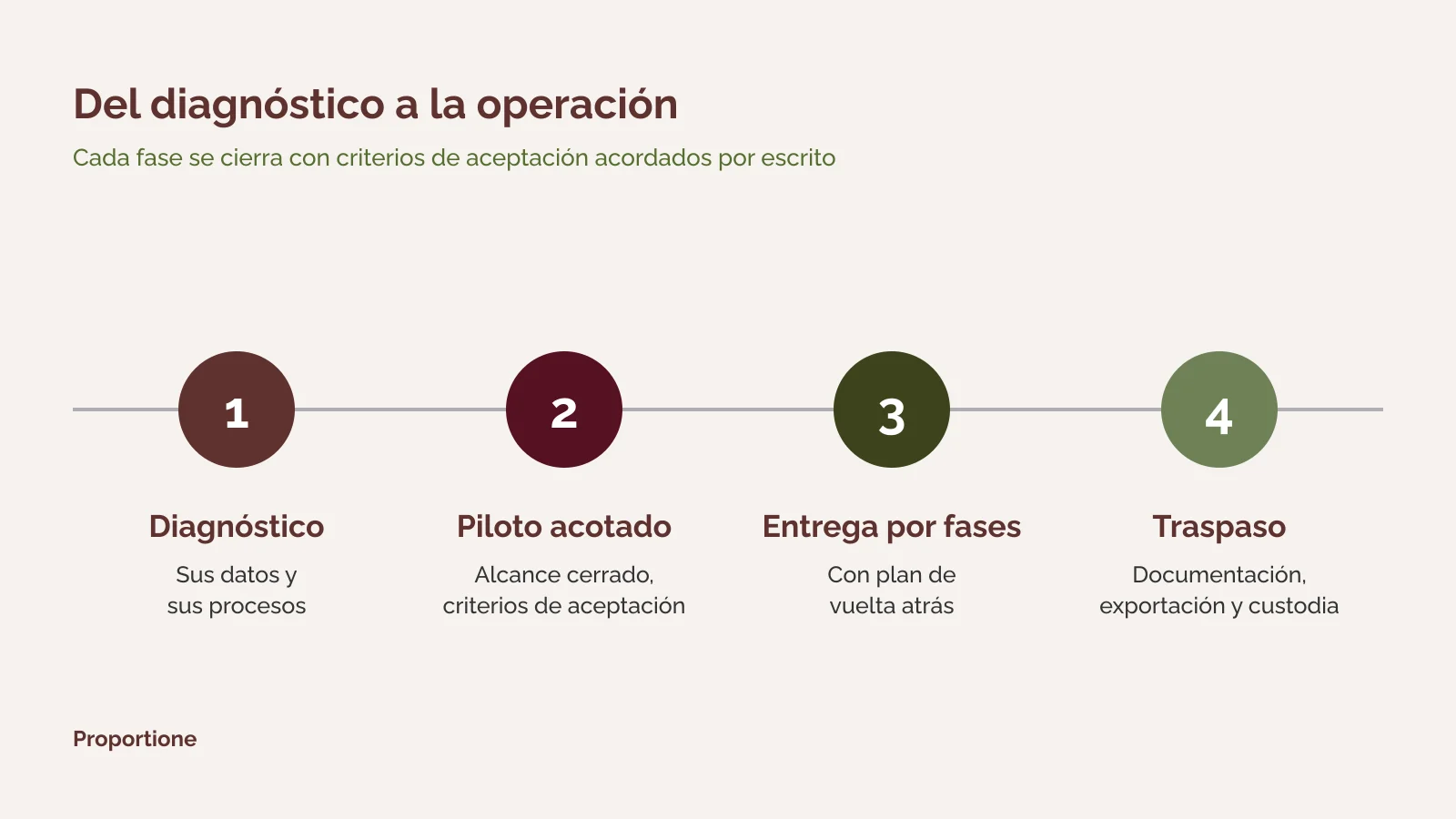
Diagram of four phases of custom development: diagnosis, limited pilot, phased delivery, and handover

The method details are in how we work. If the diagnosis points to rebuilding an application, we explain it in custom software development.

What it means for you: in each phase knows what has been delivered, what is missing, and how to go back. Next step: request the diagnosis.

First the process, then connect, and finally AI

Before moving a server, the process it sustains must be understood: what steps it has, who performs them, and what data it uses. Then, when sufficient, the old software is opened with APIs and connectors. AI comes at the end, on top of understood processes and organized data.

The sum of what we do is in Business Management Consulting and our services. How AI fits into your company, in artificial intelligence in business.

What it means for you: moving a server is the last step, not the first. Next step: tell us which server worries you the most.

Frequently Asked Questions

How long is Windows Server 2012 supported?

According to Microsoft's lifecycle page, extended support for Windows Server 2012 and 2012 R2 ended on October 10, 2023, and the last year of extended security updates closes in October 2026. Confirm the status of your installation with the manufacturer.

Do I need to migrate to the cloud when a server goes out of support?

Not necessarily. The diagnosis compares where each service should reside: in the cloud, on your premises, or a combination of both. And it compares three options, build, buy, or connect, with your company's data.

What moves to the cloud and what is best left where it is?

What works and can change location moves. What depends on an unsupported version is rebuilt. What already solves its job well stays, connected. That classification comes from the inventory of your case.

Can we do it without the data leaving our facilities?

Yes. Data extraction, migration, and any AI used subsequently can be run on your servers or on dedicated hardware, even on an offline network.

How much does it cost and how long does it take?

It depends on the scope: how many servers and services are involved, how much data needs to be organized, and what systems they connect to. That's why we don't give a figure or deadline without knowing your case. The diagnosis ends with a phased scope proposal, and from there, it is specified.

What happens if something does not go as planned during the change?

It is delivered in phases, with acceptance criteria in each and a rollback plan. The rollback plan is part of the design, not an add-on.

Request your Proportione Legacy diagnosis

Tell us what servers you have and what worries you. We will respond within two business days. [Short form: see specification in notes] If you prefer to write to us directly: contact.

Request your Proportione Legacy diagnosis

Do not send credentials or databases. We will use your data only to respond to you; more information in the Privacy Policy.