Business management software: package, custom-built, or connect what you already have?

Choosing business management software isn't about picking a brand: it's about deciding if a package covers your way of working, if it's worth building something custom, or if connecting what you already have is enough. We help you decide with your company's data, before buying or building anything.
Choosing business management software isn't about picking a brand: it's about deciding if a package covers your way of working, if it's worth building something custom, or if connecting what you already have is enough. We help you decide with your company's data, before buying or building anything.

To start, simply describe the process. Do not send credentials or databases.

Request your Proportione Legacy diagnosis

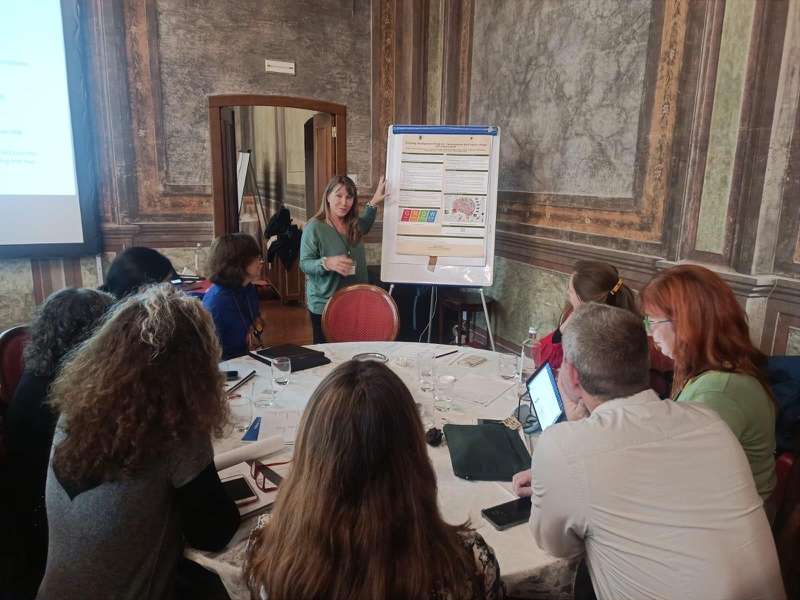
A Proportione professional presents a work plan to a group in a meeting room

Business management software is chosen for how your company works, not for the catalog

Business management software brings together in one place what the company does every day: selling, buying, invoicing, controlling stock, managing people. When it works, everyone works with the same data. When it doesn't, each department has its own spreadsheet, and someone reconciles them manually.

There are three paths, and all three are legitimate:

A market package

It is a ready-made product that is configured. It is normally the best option when your needs are standard and the product does not force you to change what differentiates you.

Custom software

It is designed based on your process. We design and develop custom software for companies; it makes sense when the process is unique and no product covers it without forcing it. We explain it in more detail in custom software development, and for specific systems in Custom ERP and Custom CRM.

Connecting what you already have

What works is opened with APIs and connectors and joined with the rest, without replacing it.

What it means for you: The question is not 'what software to buy', but 'what part of my operation is standard and what is unique'. Next step: See the criteria, which are in the next section.

A package is suitable when its process is standard; custom-made when it is what differentiates you.

A package makes sense if:

Custom-made makes sense if:

Integration makes sense if:

What it means for you: It is common to need a mix rather than a single option. Next step: decide by business area, not for the entire company all at once.

Modules are chosen by process and integrated in phases, not all at once

Management software is usually organized into modules. The most common ones:

You don't need to start with all of them. The order is determined by the process that costs you the most today: the one that forces you to duplicate data, wait for someone, or reconcile figures by hand. Each module can be a package, a custom piece, or a connection to what already exists, and they don't all have to be of the same type.

What it means for you: you can change one module without changing the whole company. Next step: list your current modules and mark which one hurts the most; that is where the diagnosis begins.

Connecting is the third option: what works stays and is integrated with the rest

Before replacing a system, it is advisable to check if simply opening it with APIs and connectors is enough. Once the process is understood and the data is organized, this is one of the three options in the diagnostic: connecting what works with the rest.

If your system lacks support or its manufacturer no longer exists, the situation is different and has its own page: legacy systems migration service.

What it means for you: keeping what works is a real option, not an exception. Next step: request the diagnostic and have the three options compared.

AI comes afterwards, based on understood processes and organized data

We approach AI later, when the process is understood and the data is organized. The sequence is: first understand and digitize the operation, then connect the software you already have, and only then apply AI on top.

AI can run on your own server and, if necessary, without an Internet connection.

What it means for you: your data does not have to leave your premises. Next step: see how it fits into artificial intelligence in business.

The diagnostic compares the three options using your company's data

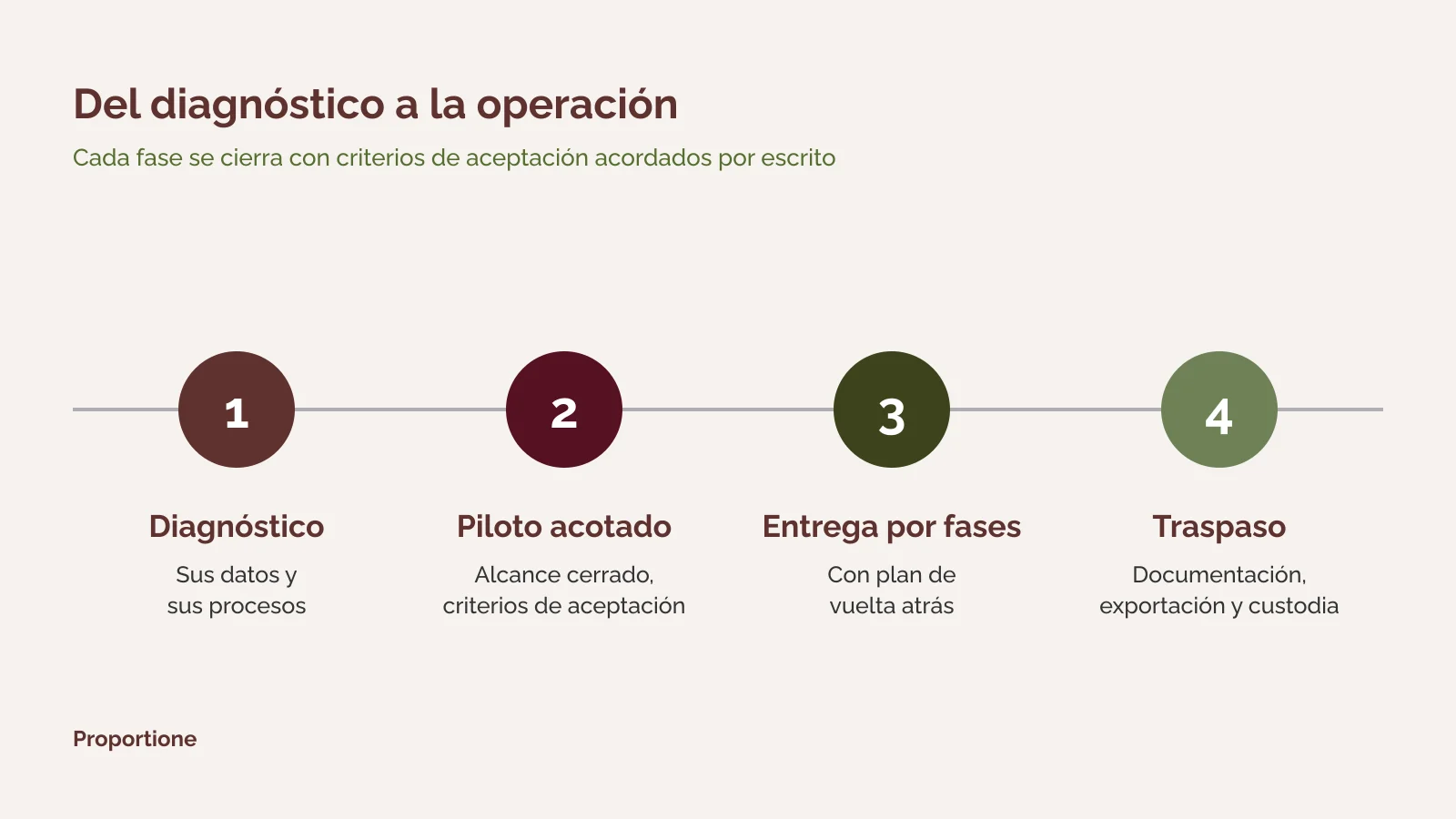
We start with a diagnosis of your data and processes before choosing a destination. It delivers an inventory of processes and data, options (build, buy, or connect), and a phased scope proposal. The general details of the method are in how we work.

Diagram of four phases of custom software development: diagnosis, limited pilot, phased delivery, and handover

What it means for you: at all times you know what has been delivered, what is missing, and how to roll back. Next step: request the diagnosis.

Request your Proportione Legacy diagnosis

If we build something custom, the code is yours and it is stated in the contract

What it means for you: if any module is built, you are not tied to us to move forward. Next step: review the phased proposal.

Signs that your current management software no longer serves you

What it means for you: If you recognize yourself in any of them, you don't need to know the solution to get started. Next step: Describe your case in the form below.

Frequently Asked Questions

¿What is business management software?

It is the set of tools with which a company records and connects its operations: sales, purchases, invoicing, inventory, human resources. It can be an off-the-shelf package, a custom development, or a combination of both connected with what already exists.

¿Package or custom?

If an off-the-shelf package meets your needs without forcing you to change how you work, it is usually the best option. Custom software makes sense when a process is truly unique to your business. There is a third way: connecting what you already have. The diagnosis compares all three.

How much does it cost?

It depends on the scope: how many processes are involved, how much data needs to be organized, and what systems it connects to. That's why we don't give a figure without knowing your case. The diagnosis ends with a phased scope proposal, and from there, it is specified.

Can we connect what we already have without changing everything?

This is often one of the options. The diagnosis determines what can be connected, what should be replaced, and the order to follow. If your system is no longer supported, the legacy system migration page explains how to analyze it.

If you build something custom, who owns the code?

The code belongs to the client, and this is explicitly stated in the contract. Documentation, exportability, and custody are verifiable and form part of the design.

Can we use AI without our data leaving our company?

AI can run on your own server and, if necessary, without an Internet connection.

Request your Proportione Legacy diagnosis

Tell us what system or process you have or need. We will respond within two business days. [Short form: see specification in notes]

Request your Proportione Legacy diagnosis

Do not send credentials or databases. We will use your data only to respond to you; more information in the Privacy Policy.