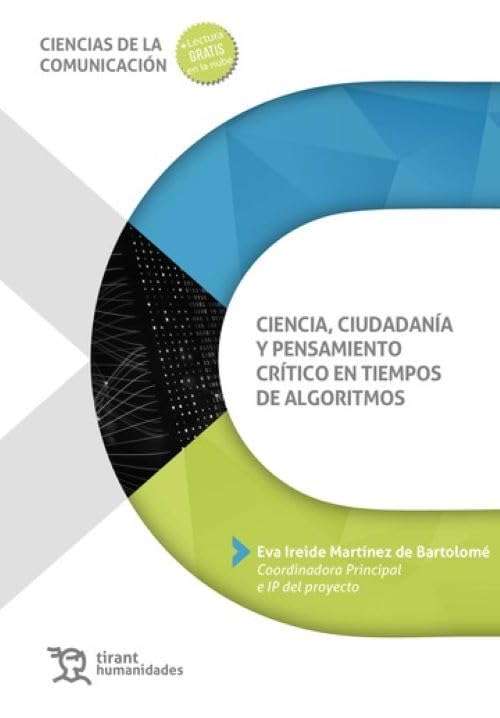
Tirant lo Blanch —the most highly rated academic and legal publisher in Spain according to the CSIC SPI ranking, ahead of Aranzadi, Dykinson or McGraw Hill— has just published Science, Citizenship and Critical Thinking in Times of Algorithms, a collective work coordinated by Eva Ireide Martínez de Bartolomé on how to maintain one's own judgment in a world mediated by algorithms. Inside there is a chapter of ours: «AI-Assisted Critical Thinking: 20-60-20 Framework Context-Generation-Criterion in University Education».
It is the peer-reviewed formalization of something we advocate daily at Proportione: generative AI is not here to replace critical thinking, it's here to force us to teach it better.
The problem is not that students use ChatGPT
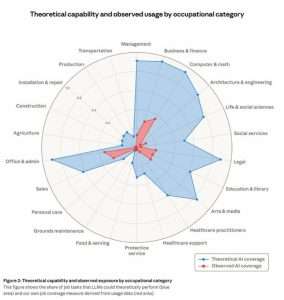
The problem is that they use it as an oracle: ask, copy, submit. When the answer arrives in three seconds, what atrophies is not knowledge, it is judgment. Our proposal reverses the approach: turn the classroom into a safe laboratory where the student learns to command the AI, not to obey it.
The 20-60-20 framework: Context – Generation – Criterion
The method divides the work of solving a complex problem into three phases, with different human and machine involvement:
20% · Context (human). The student defines the problem, provides the context, and strategically formulates the questions. Here, it is decided what to ask and how to direct the query: creative thinking before writing the first prompt.
60% · Generation (AI). ChatGPT assumes the main production load: drafts, ideas, analysis. The student reads critically, identifies what is useful, and detects errors and inconsistencies.
20% · Judgment (human). The student validates against the case data and their own knowledge, corrects inaccuracies, filters biases, and decides what to accept, what to modify, and what to discard. The synthesis and conclusion are theirs.
The underlying idea: AI generates quickly, but quality critically depends on human intervention at the beginning and at the end. It is scaffolding that is removed when the response is consolidated. ChatGPT ceases to be the oracle and becomes the co-pilot; the student is the pilot in command.
Tested in a real exam, not on a slide
The chapter does not describe one intention, but two courses of the subject Innovation Management in the Degree in Business Administration of UNIE University (60 students aged 19 to 22 years). In the final exam —in-person, individual— the students answered five open-ended questions about real business crises (the leak of Google's indexing algorithm, the Iberian electricity blackout) with ChatGPT permitted and supervised.
The key was in the rubric. It didn't reward the answer, it rewarded the judgment about it:
- Strategic and argumentative coherence — 40%
- Reasoned use of data and evidence — 30%
- Detection and management of hallucinations — 20%
- Writing and structure — 10%
When the evaluation rewards hunting for AI errors more than the answer itself, copying stops making sense. What is exercised is intellectual integrity.
What happened
It neither inflated grades nor lowered the bar: the failure rate remained the same —even slightly higher—, because those who did not apply critical thinking did not pass, despite having ChatGPT in front of them. A third of the highest grades were obtained with markedly human responses: no high-achieving student literally transcribed what the machine suggested. And in the closing interviews, most said they felt more motivated by being able to contrast their hypotheses with a model. As one of them summarized: «I learned that ChatGPT is useful but it doesn't think for you, because you have the last word».
Knowing how to use AI well has become a differentiating competence. Teaching it —with safeguards of human verification and clear learning objectives— is training critical digital citizenship. The 20-60-20 framework is replicable in other disciplines, and that is exactly the intention with which we publish it.
The same principle, also outside the classroom
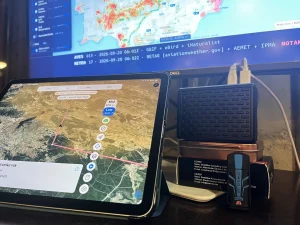
It's not armchair theory. The 20-60-20 is the same skeleton with which we designed the AI copilot of Proportione Aviaria for decision support in aeronautical risk: the machine proposes, the human decides. One framework, two worlds —the university and a critical safety context— and the same conviction: AI enhances judgment, it does not replace it.
Science, Citizenship and Critical Thinking in Times of Algorithms
Tirant Humanidades, 2026 · work coordinated by Eva Ireide Martínez de Bartolomé
Chapter: Javier Cuervo and Mayte Tortosa. Also presented at the UA Forum (University of Aveiro, July 2025). Part of the applied research of Proportione in responsible AI and education — see line of research.